Trust: The Reinforcement of Good Governance
By Mmabatho Boitshepo Oke 8, June 2026
The past 18 months have shown that trust is central to society’s progress. Global funding cuts and geopolitical tensions have tested governance, making trust a fragile factor in how governance systems function. Today, honouring diplomatic agreements, holding institutions accountable, and ensuring pathways for citizen participation are more important than ever.
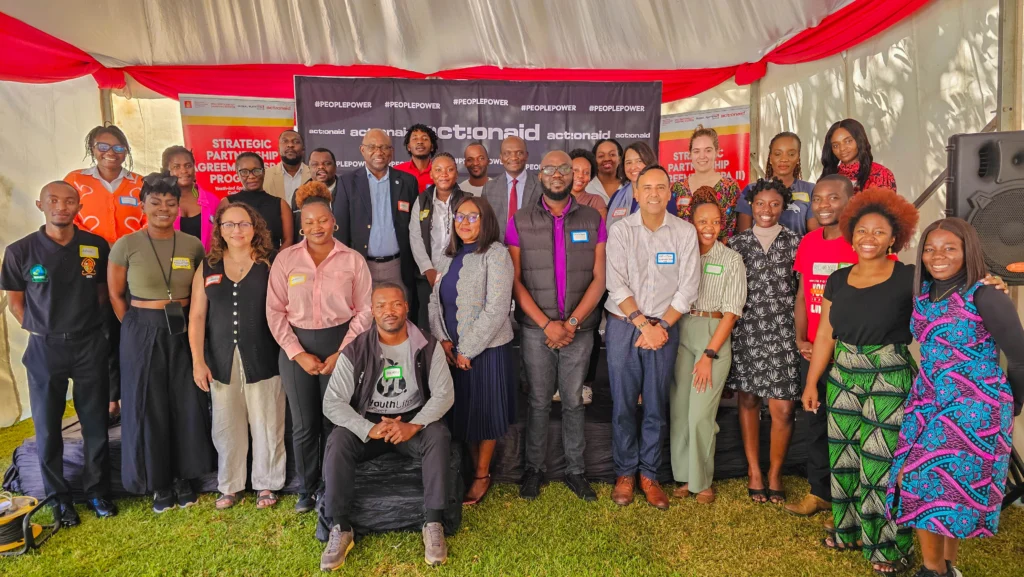
Last month, I was set to attend the RightsCon Conference in Lusaka, Zambia. An annual convening where digital rights practitioners engage deeply on human rights and technology issues, towards creating pathways where public trust is invested in committing to more equitable, transparent, and fair digital systems. The convening was unexpectedly and abruptly cancelled, with the Zambian government citing that the conference ‘did not align with national values’. While this left many of us attendees in the lurch, I sought to soldier on to Lusaka to build connections, share learnings, and reinvigorate my passion for building inclusive governance systems. At the invitation of Governance Action Hub, I participated in their event in partnership with Action Aid Zambia on Governing for Climate held at the Global Platform Zambia youth center in Lusaka.
The convening brought together governance practitioners, researchers, policymakers, and civil society leaders working at the intersection of climate action and governance. Dialogues were focused on strengthening climate governance across subnational, national, and regional contexts, featuring best practices from Colombia and Zambia. This marked more than a run-of-the-mill engagement, but a moment to find practical ways of how trust is built, maintained, and how it can be restored in the wake of geopolitical uncertainty. Through engagement and reflection, here are the three ways trust can be built, maintained, and restored to maintain good governance:
Building trust through communication
Governance actors, including community members, need to be able to engage in impactful issues. What works in this regard is centering live experiences in communities on research data and policy. Michael Mwansa from Action Aid Zambia found useful narratives on environmental stories as human-centred. For example, when climate disasters such as flash floods impact the country, the challenges faced are numerous including lack of access to safe water, leading to cholera outbreaks. Additionally, Mwansa highlighted that data should typically be visualized while easing off on the use of technical terms and leaning more on daily language.
Visualizing data through infographics and humanizing environmental stories not only promotes sensitization on climate issues but also contributes to information integrity. Governance actors, including public servants, community and cultural leaders, influencers and the public, are more clued in on mitigating climate change and can develop a clear pathway on their respective roles towards a country’s resilience.
Maintaining trust through engagement
Engagement is an integral piece in trust-building. For many, policies are seen as dead documents, pieces of legislation that have little effect on the common man. However, policies are living documents, informed through consultative engagements, validations, reviews, and reforms. Many human rights instruments are developed in this manner, and it is through engagement that they are kept alive.
State and non-state actors should be reasonably reachable, allowing for community leadership and members to provide feedback, advice, or updates on governance matters.
An important aspect of engagement through consultative practices is to ensure a circular feedback loop. Typically, consultative processes involve state and non-state actors engaged in outreach activities, travelling to communities and engaging with community actors and leadership. However, without a pathway for communities to engage with them, the engagement becomes a linear model. State and non-state actors should be reasonably reachable, allowing for community leadership and members to provide feedback, advice, or updates on governance matters.
Within engagement, inclusivity needs to be a continuous practice. Determinants for inclusivity need to be encoded into program design and policy application, ensuring that people who have been previously excluded are engaged as practitioners, collaborators, and participants in different governance functions. A good practice of this was shared at the event, 4 years ago, Zambia translated its national climate change learning strategy, working with the Zambia National Union of the Blind in its translation and dissemination. This impactful process allows for policy documents to be representative of all populations affected by the strategic implementation of policies from the state and allows for a more robust reflection of engagement with communities.
Restoring trust through collaboration
Recent global challenges, including funding cuts and geopolitical tensions, have rippled into far-reaching consequences, with countries in the Global Majority more severely impacted. State actors and civil societies have been advancing work on domestic resource mobilization, looking at blended financing mechanisms to ensure resilience in their infrastructure and programmatic work. This approach has also highlighted how previous approaches have been fragmented, and a need for collaborative work is evident. Using knowledge such as strategy documents from various organizations can help create insight into different mandates governance actors have and can help in developing collaborative targets.
Geopolitical tensions have also placed bilateral and multilateral agreements to the test and have placed a focus on strengthening localization approaches. While international agreements still need to be honoured, their codification into local laws can help translate into multiple actors enabling these instruments into action.
Essentially, trust is beyond an abstraction. It is the first casualty of governance failure, and the first requirement of its recovery. Approaches rooted in inclusivity, transparency, accountability and collaboration help codify trust into practice and build towards inclusive governance systems.
It is important for governance actors to practice building trust through multi-sectoral coalitions and co-create solutions. The Governance Explorers Network is a practical platform that enables collaborative engagement and supports governance initiatives. Join the network to engage with like-minded practitioners and contribute to creating a trust surplus in global governance.
Meet the Explorers

Join the Governance Explorers
We are bringing together a global network of people eager to rethink governance and influence local, national and global debates.

"Goodwill from both government and local community leaders is essential for successful climate action"

"The question is how do you get the good idea to reach the right people to make change?"