
02. Governance for Whom?
 Mario Picon
 After more than 20 years since that fieldwork in the Amazon forest, I have a tendency, maybe because of what I have seen, maybe because of age, to see the development space with an admittedly weird mix of both cynicism and a strong sense of opportunity.
A bit over two years ago, I made a pitch that I probably should have never made. The focus of it was a problem maybe not at the forefront of most funders’ agenda but reflected in one way or another in all our work: a rethinking of what governance can be to achieve goals desirable by society.
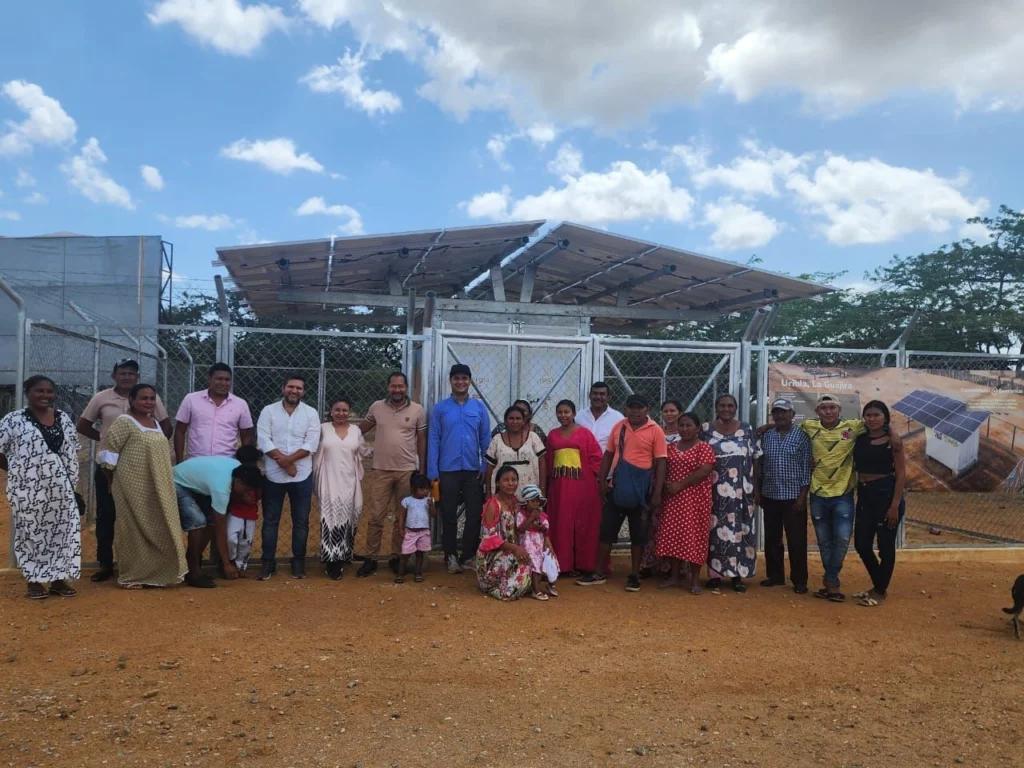
We have been looking for decades at governance as a set of organizational structures and rules mirroring perceived success in different geographies or for different projects. And we ended up with a prescription of what good governance looks like, and translated that into checklists with items to tick, rather than focusing on the problem we were trying to solve, with key actors adapting to feedback loops on the ground. I am in Colombia right now, and a few conversations have highlighted how this translates, for example, to the way efforts for energy transition are implemented in the country. More on this on an upcoming post.
Four years ago, Daniel Kaufmann and I published The Audacity Deficit in Natural Resources Governance (2022), and called for expanding the ‘reform production possibility frontier’ through increased audacity in governance. Audacity requires deep complementarity and coordination of reforms across areas, sectors, and alliances, while acknowledging the challenges and incentives that affect different countries. Taking such an approach would harness innovation in who, why, how, and what is involved in making reforms happen.
This call, this need is why with a few crazy, amazing people, we started The Governance Action Hub.
What if systems could listen, not just command?
What if collaboration wasn’t a workshop buzzword, but a civic muscle?
And what if the public sector, philanthropists, civil society, instead of chasing “what works,” asked the braver question: what else could be possible?
We need more experimentation in governance. One that is grounded in collaboration and inclusion. A lab. A practice. A new kind of platform.
One that does not pitch solutions. Rather, hosts explorations.
One that does not obsess with replicating. Rather, learns in public.
One that does not speak for communities. Rather, makes space for people to raise their hands.
This isn’t about reform. It’s about reimagining.
At the Governance Action Hub, we treat governance not as a structure, but as a process of steering. A shared act of navigating complex systems toward futures we want to inhabit.
It starts with a simple, subversive belief: people closest to the problem often hold the most insight into how to move forward.
Which is why each initiative begins with real, plural voices:
- Youth. Governments. Activists. Journalists.
- Miners. Mayors. Coders. Caregivers.
- People who know the system by living it,
Here’s how it works:
Each Exploration is a test flight into what collaborative governance could look like:
- Start with friction. A place where things have failed or stagnated. Not because people don’t care, but because the old approach isn’t enough.
- Invite many perspectives. Use polls, podcasts, interviews. Surface divergence. Create permission to disagree out loud.
- Co-create next moves. Don’t chase consensus. Chase coherence. Let groups build forward in a way that makes sense to them.
- Collaborate on tangible outputs. A plan. A podcast. A video. A prototype. Something that reflects collective effort.
- Back the bold. Offer small grants or link ideas to real funding. Not just to scale, but to test what might actually work.
- Share what you learn. The wins. The stumbles. The unexpected turns. Make learning contagious.
And above all: stay honest about the politics. Power is real. Institutions matter. But so do networks. The Hub lives in that tension.
Our inspirations
Our inspirations are broad and go well beyond the development space. Indy Johar and his team’s approach to governance in Dark Matter Labs; Yuen Yuen Ang and her arguments on how to seize the polytunity of our times; Mariana Mazzucatto’s mission driven economies and exploring what governments can become.
Let’s be honest: this isn’t for everyone.
It’s not fast. It’s not clean. It’s not scalable in the traditional sense.
But it’s real. And it’s contributing to something we desperately need: a new field of civic possibility, grown from practice, inclusion, trust, and the bravery to try another way.
Hopefully, I piqued your curiosity. Next, we’ll talk about strategy (and yes, also tactics).
Cheers, from the only Journal that sends you a hug.
Mario
Read the previous Journal 01. The (Not So) Grand Opening
Follow the Journey Into The Unknown
Director’s CornerJoin the Governance Explorers
We are bringing together a global network of people eager to rethink governance and influence local, national and global debates.

"Goodwill from both government and local community leaders is essential for successful climate action"

"The question is how do you get the good idea to reach the right people to make change?"