
Rethinking Development: Reflections from the Governance Explorers Network convening in Nairobi
 Tracy Jooste
 A year ago, we started the Governance Explorers’ Network. It was born out of a simple realization: that most people doing governance work rarely get the chance to explore and test new ideas. The existing incentives encourage technical fixes, narrow deliverables, and working within the system rather than questioning it. We wanted to build a space where practitioners, researchers, local leaders, and people who genuinely care about the future could come together, ask harder questions, and find each other.
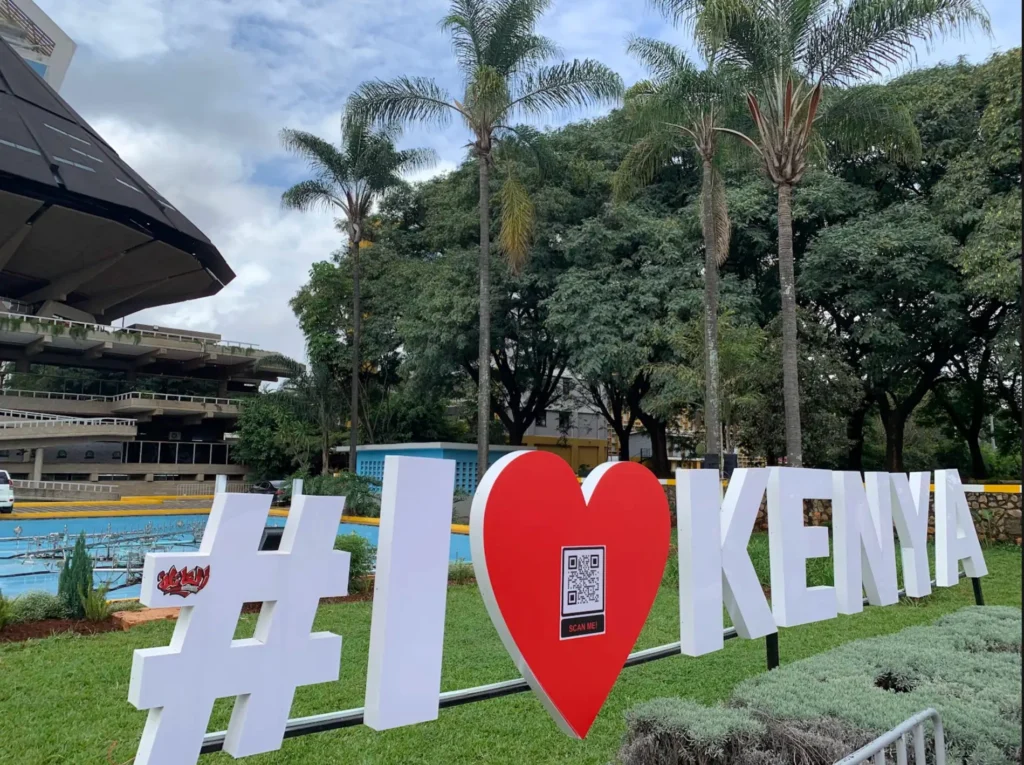
Members of the network met in person for the first time, in Nairobi last week. After a year of building this community online, finally being together in the same room was energizing and, frankly, exactly what we’d hoped for when we started this.
The people in that room came from civil society, grassroots organizations and youth-led initiatives. Their expertise spanned economic development, climate action, democracy, civic engagement, and innovation. What they shared was a commitment to thinking differently about governance and a genuine curiosity about how to make change happen.
To kick off the conversation I asked participants a simple question: if you could challenge one assumption in development, what would it be? What followed was a collective unpacking of the tensions many of us carry in this work.
On localization and power
One of the first things that came up was something many people in the sector feel:
“There is still a gap between the rhetoric of localization and real accountability.”
This isn’t a new critique. But it kept coming back. Local actors are still too often brought in as implementers rather than decision-makers. Funding, research agendas, and power still flow from elsewhere, usually the North. The hard question that emerged was who holds accountability for closing that gap.
On repeating ourselves without question
“We keep repeating the same programs — but rarely pause to ask why.”
This reflection led to an unpacking of the structural drivers that inhibit innovation. As one participant put it: “Short-term funding cycles make long-term change difficult.” Donor conformity and risk-averse systems make it genuinely difficult to do things differently. Innovation gets talked about constantly, but the conditions for it — flexibility, patience, tolerance for uncertainty — are rarely funded. So organizations end up optimizing for what’s fundable rather than what’s needed.
On knowledge and who decides
The conversation turned to something that sits underneath a lot of development practice:
“Decolonizing development starts with a simple question: who decides?”
Who sets the research agenda? Whose knowledge gets counted as evidence? These aren’t abstract questions. They shape what gets funded, what gets measured, and what gets ignored. Several participants pushed for a much more honest reckoning with how knowledge is produced in this sector — and whose voices are shaping it.
What people are betting on
After reflecting on what needs to change, I asked participants to share their big bets for the future. Their ideas were specific, personal, and grounded.
One participant put it plainly: “Local actors know the context. Resources should reach them directly. That is where real change begins.” Several others echoed this as something they clearly felt. The frustration with resources and decision-making remaining distant from the communities they’re meant to serve came up again and again.
Another participant made the case for decolonizing education — valuing local knowledge and finding ways to scale the innovations that communities are already creating and have been practising. Others pushed for a fundamental shift in how global research is funded and designed, so that evidence generation is participatory and locally grounded, not imported.
There was also real excitement about South–South collaboration — more direct knowledge exchange between regions like Asia and Africa, without everything being routed through the Global North first.
And one idea that stuck: the vision of creating a new people-led international organization. One built on trust, with strong accountability — not to donors, but to people. The argument was simple: the knowledge and experience to solve these challenges already exist in many communities. We just need organizations willing to trust that.
Where we go from here
The Nairobi convening is part of a bigger effort we’re making at the Governance Action Hub to create spaces for this kind of critical reflection and solution generation.
This year, we launched a course that goes deeper into exactly the questions the Nairobi room was wrestling with. International Development Challenges: Reclaiming Development through Agency, Collaboration, and Inclusion — is designed for practitioners, policy professionals, and changemakers who want to move beyond the standard development frameworks and think seriously about what it means to reclaim development from the ground up.
It covers the historical roots of how development thinking got to where it is, the political economy of aid and reform, and — importantly — the alternative models emerging from local agency and civic innovation. The conversations from Nairobi could have come straight from the syllabus. Or maybe the syllabus reflects what people working in this sector have been trying to say for years.
The course is already underway, running online through May. If you’re asking the same questions we were asking in Nairobi, it’s not too late to join.
👉 Find out more and register here
What assumptions in development are you ready to challenge?
Whether through the course, the Governance Explorers Network, or just this conversation — we’d love to hear from you. The questions are open. The work is ongoing.
Join the Governance Explorers
We are bringing together a global network of people eager to rethink governance and influence local, national and global debates.
"Goodwill from both government and local community leaders is essential for successful climate action"

"The question is how do you get the good idea to reach the right people to make change?"