Cooling as a public good: Lessons from London Climate Action Week
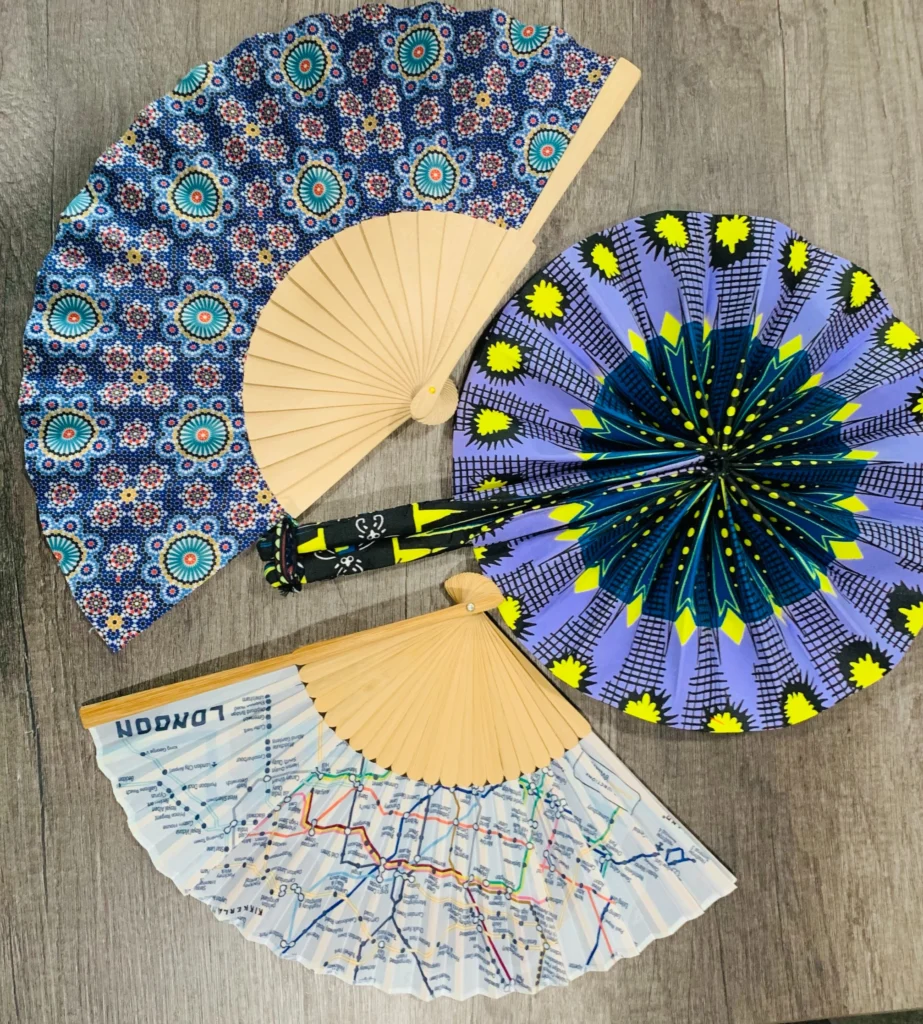

I’ve become a fan of fans — the old-timey handheld kind. I’ve picked up a few on my travels this year. It’s not that I think they look cute; it’s simply a way to cope with soaring temperatures.
I bought one last week during London Climate Action Week, while the city hit a red extreme heat warning — only the second in its history. A few climate events were cancelled or scaled back because it was, ironically, too hot to hold them. It was almost too on-the-nose.
These used to be considered unusual weather events, but they’re becoming a pattern. The last two cities I visited this year, Rabat and Lusaka, were both gripped by extreme heat, and I’ve just returned to a sweltering Washington DC.
A fan is a minor adaptation. Put simply, it’s a private solution to a public problem. Because rising temperatures touch everything: the air we breathe, the variety and price of the food we eat, even the quality of our sleep. The impact, however, isn’t shared equally. It falls hardest on outdoor workers, older people, kids in classrooms built to retain heat, and anyone without the means to cool their own corner of the world. But almost no one is entirely spared.
Sometimes the sheer scale of climate change can feel overwhelming, even exhausting. I went to London braced for some of that heaviness. I returned with something closer to hope. Yes, there were signs of worry in some rooms. But there was also ingenuity — ideas being tested, cities sharing what works, and a genuine spirit of collective action. And the most encouraging solutions I saw had one thing in common: they reach beyond the individual. They’re built to cool whole cities, countries, even regions — public in scale and designed for the many rather than the few.
Here are a few that stuck with me.
Medellín turned its streets into shade
The City of Medellín launched its Green Corridors project in 2016 to fight a severe urban heat island, created by heat-absorbing concrete, and dangerous air pollution. The city greened 18 roads and 12 waterways into a roughly 20-km interconnected network of shade. Within three years, average temperatures fell by 3.5°C and surface temperatures by a striking 10.3°C, while air pollution and respiratory illness dropped too. The initiative was catalyzed by the political will to make a large public investment, but it endures because residents help sustain it — some of them trained as gardeners to build and maintain the corridors. Crucially, it was designed to reach the vulnerable neighborhoods most exposed to heat, learning from an earlier greenbelt scheme that had displaced poorer communities.
Speaking at the C40 Local Climate Action Summit last week, Medellín’s mayor, Federico Gutiérrez, shared his philosophy: “problems are opportunities.” A measurable drop in temperature across whole neighborhoods is the result of persistent efforts, and it has clearly inspired other cities to follow.
No city beats the heat alone
More than 185 cities have joined Beat the Heat, a drive led by the UNEP Cool Coalition and Brazil’s COP30 presidency to turn shared commitments into action on the ground.
In Chennai, where dangerous heat is now routine, the city’s Heat Action Plan wires together early-warning alerts, neighborhood cooling shelters, public water points, and direct coordination between hospitals, schools and local authorities. The city is now building heat resilience into its long-term masterplan, with more tree cover and new buildings designed to stay cool on their own. Paris, meanwhile, is greening schools and housing, laying reflective surfaces, and mapping its most vulnerable streets so relief reaches the people who need it first.
The initiative is underpinned by a belief that the cheapest, fairest and most durable cooling is passive and shared: shade, reflective roofs, green space, water. Progress has been uneven but the thread running through all of it remains valuable. As UNEP Executive Director Inger Andersen put it, “we cannot air condition our way out of the heat crisis,” and “cooling must be treated as essential infrastructure, alongside water and energy.”
 Photo by Taylor Floyd Mews on Unsplash
Young people are leading the charge
Not every solution is a piece of infrastructure. One of the most energizing voices I heard all week came from the Malaysian Youth Delegation — a youth-led movement that has represented young Malaysians at international climate negotiations since 2015.
Their work is focused on applying pressure and driving inclusive decision making. They advocate for stronger climate policy, holding both national leaders and international institutions to account, and educating thousands of young people. They’ve shown up at five UN climate conferences and turned each one into a call to action back home.
Their efforts are a reminder that adaptation isn’t built by mayors and agencies alone — it’s driven by ordinary people, often young ones, who are determined to be heard. Listening to them, it was hard not to feel hopeful.
London connects culture to cooling
Closer to where I spent the week, Londoners were encouraged to Cool Off in Culture — a campaign that turns everyday cultural spaces, from libraries to museums, into a network of public cooling spaces open to anyone who needs to escape the heat.
I love this one because it isn’t a grand new piece of technology or infrastructure. It’s a civic decision: institutions that already exist, choosing to leave their doors open when the temperature climbs. When the next heatwave hits, the coolest, safest place near you might simply be the local library.
From coping to adapting
None of these solutions are far-off or futuristic. They’re practical; they’re already happening, and they’ll no doubt spark others. They treat cooling not as a private comfort to be bought, but as a public asset to be shared, like clean water or safe streets. They are also a reminder of who makes that shift happen — communities, and often young people, insisting on it.
I’ll keep using my fans to cope with the heat. But the bigger question — the one London left me with — is how we make the shift from private comfort to shared responsibility. That’s the difference between coping and adapting.
Join the Governance Explorers
We are bringing together a global network of people eager to rethink governance and influence local, national and global debates.

"Goodwill from both government and local community leaders is essential for successful climate action"

"The question is how do you get the good idea to reach the right people to make change?"